
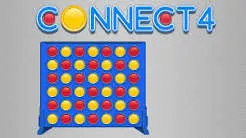
 Connect 4 multiplayer
Connect 4 is one of the simplest two-player games to learn and one of the easiest to play badly. A few ideas about threats and timing separate casual players from consistent winners. This guide covers the rules, the best ways to play with a friend, and strategy that works.
It’s a classic two-player game on a vertical grid. Players take turns dropping coloured discs into columns, and gravity stacks them from the bottom. The first player to line up four discs in a row wins. The game was published commercially under the name Connect Four in the 1970s, and versions of the idea go by other names, such as Four in a Row. [Add here: anything specific to your version, such as colours, whether there’s a computer opponent, and whether play is local or online, once you’ve confirmed it.]
The standard board is seven columns wide and six rows tall. Versions of the game sometimes alternate who starts each new round, so check which one you’re playing.
Two players share one device and take turns clicking. It’s the quickest way to start and ideal for a classroom break or sitting side by side. The downside is that you can see each other’s faces, which makes bluffing harder.
Online play lets you face someone on another device. It’s handy when you’re apart, but a poor connection can cause lag or dropped matches. [Confirm whether your version supports online play and how players connect, and rewrite this section accordingly.]
The middle column is part of more possible winning lines than any other, so discs there are more useful. When you can, start in the centre and keep claiming central spaces. Strong players usually fight for the middle first.
A threat is a spot where one more disc would win. A double threat is two threats at once, and your opponent can only block one. Most strong games are won this way, so work toward positions where one move creates two chances.
Blocking is necessary, but pay attention to what your move gives away. If you drop a disc under a spot your opponent wants, you may hand them that space. Before you play, ask: what does this disc let my opponent do next?
If you count rows from the bottom, threats on certain rows tend to matter more for each player. In general, the player who moves first benefits from threats on odd rows, and the second player from threats on even rows. It’s an advanced idea, but it’s worth keeping in mind once you’ve got the basics down.
| Problem | Try this |
|---|---|
| Wrong column selected | Move your pointer slowly, and check which column is highlighted before clicking |
| Touch drops in the wrong place | Try a mouse, or tap more deliberately |
| Game is laggy | Close extra tabs and refresh the page |
| Online match drops | Check your connection, then restart the match |
| Won’t load | Refresh, try another browser and check your connection |
Some networks block gaming sites, and nobody can honestly promise a game will load on a filtered connection. If Connect 4 doesn’t load, that’s usually a deliberate rule. Check your school’s policy and keep play to breaks and free time.
Yes, you can play it free in your browser with nothing to download.
Get four of your discs in a row, horizontally, vertically or diagonally, before your opponent does.
In theory, the first player has the advantage if they start in the centre column. In casual games, many people alternate who starts.
Some versions include a computer opponent.
Diagonals are easy to miss because the pieces build up gradually. Scan them every turn, not just rows and columns.